
Primary Antibody Matched Pairs

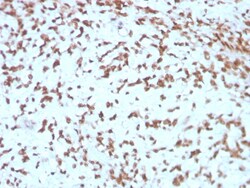
Biotium Cathepsin D (Tumor Marker)(CTSD/3275), CF740 conjugate, 0.1mg/mL
Cathepsin D is a ubiquitously expressed lysosomal aspartyl protease involved in the normal degradation of proteins. It is synthesized as an inactive 43 kDa preprocathepsin D that is cleaved and glycosylated to form a 46 kDa procathepsin D and then further cleaved to produce 28 kDa and 15 kDa subunits (heavy and light chains, respectively). Cathepsin D exhibits pepsin-like activity and plays a role in protein turnover and in the proteolytic activation of hormones and growth factors. Mutations in this gene play a causal role in neuronal ceroid lipofuscinosis-10 and may be involved in the pathogenesis of several other diseases, including breast cancer and possibly Alzheimer's disease. Primary antibodies are available purified, or with a selection of fluorescent CF Dyes and other labels. CF Dyes offer exceptional brightness and photostability. Note: Conjugates of blue fluorescent dyes like CF405S and CF405M are not recommended for detecting low abundance targets, because blu


Medchemexpress LLC Recombinant mouse cellular retinoic acid-binding protein 2, His-tagged | >95.0% | 100 UG

Recombinant mouse cellular retinoic acid-binding protein 2 with an N-terminal 6xHis tag, supplied lyophilized as a 100 μg research reagent. It is expressed in E. coli, has an approximate molecular weight of 16 kDa, and is intended for studies of intracellular retinoic acid transport and retinoic acid receptor interactions.
- Purity greater than 95% by reducing SDS-PAGE.
- Lyophilized from 0.22 μm filtered PBS, pH 7.4.
- Expression system: Escherichia coli.
- Molecular weight approximately 16 kDa.
- Store lyophilized at -20°C; stable for 2 years from receipt.
- After reconstitution, store at 4°C for 1 week or aliquot and freeze at -20°C/-80°C for long-term storage.
- Do not reconstitute below 100 μg/mL in ddH2O; add carrier protein for long-term stability.


Medchemexpress LLC S100A8-S100A9 Hetero 50ug
Recombinant human S100A8-S100A9 heterodimer protein supplied as a purified solution with a C-terminal His tag. Produced by coexpression in E. coli and purified to >95% purity, the heterodimer (calprotectin) is suitable for biochemical and cell-based assays investigating inflammation, immune signaling, and metal-binding activity.
- High purity (>95%) suitable for analytical and functional studies.
- C-terminal 6xHis tag for affinity purification and detection.
- Expressed in Escherichia coli for scalable production.
- Available in multiple sizes including 50 μg for small-scale assays.
- Contains human S100A8 and S100A9 sequences (UniProt P05109, P06702).
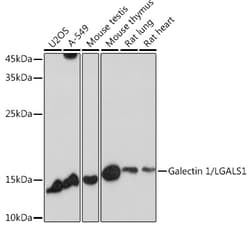
ABclonal Technology Galectin 1/LGALS1 Rabbit pAb
The galectins are a family of beta-galactoside-binding proteins implicated in modulating cell-cell and cell-matrix interactions. This gene product may act as an autocrine negative growth factor that regulates cell proliferation.

Human SerpinA3 ELISA Pair Set 5PP (Sino Biological)
Each vial contains 170 ng of recombinant Human SerpinA3. Reconstitute with 1 mL detection antibody dilution buffer. After reconstitution, store at -20℃ to -80℃ in a manual defrost freezer. A seven-point standard curve using 2-fold serial dilutions in sample dilution buffer, and a high standard of 3000 pg/mL is recommended.
AdipoGen IL-36Ra (human) Matched Pair Detection Set (1 Set)
Matched Pair Detection Set. Detects human IL-36Ra. Colorimetric assay. Sample Type: Cell Culture Supernatant. Range: 0.78 to 50ng/ml. Sensitivity: 0.5ng/ml. IL-36Ra/IL-1F5 is a highly and specific antagonist of the IL-1 receptor-related protein 2-mediated response to IL-36alpha (IL-1F6), IL-36beta (IL-1F8) and IL-36gamma (IL-1F9). These cytokines bind to IL-36R (IL-1Rrp2) and IL-1RAcP, activating similar intracellular signals as IL-1. IL-36Ra inhibits the production of proinflammatory cytokines, including IL-12, IL-1beta, IL-6, TNF-alpha and IL-23 induced by IL-36 in BMDC and CD4 T cells. Skin and dendritic cells are targets of the IL-36 interleukins leading to a Th1 response. Recently mutations that affect the levels and the activity of IL-36Ra have been found in patients with pustular psoriasis, leading to enhanced production of inflammatory cytokines (IL-8 in particular) by keratinocytes.
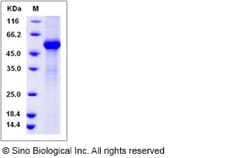
Mouse TFPI2 Protein 50ug (Sino Biological)
A DNA sequence encoding the mouse TFPI2 (O35536) (Met1-Lys211) was expressed, fused with the Fc region of human IgG1 at the C-terminus.
Genscript Corporation RBP4 His Human
The properties of retinol binding protein is the transport carrier of vitamin A in the plasma Human-retinol binding protein is a single-chain polypeptide with a molecular weight of approximately 21000 and one binding site for retinol and other forms of vitamin A In addition compounds related to retinol such as retinal retinoic acid retinyl esters and geometric isomers of retinol and of retinal were evaluated for their ability to bind to this protein In plasma RBP4-retinol forms a complex with transthyretin (TTR) also known as thyroxine-binding protein and prealbumin Defects in RBP4 cause retinol-binding protein deficiency which affects night vision

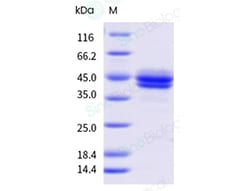
Sino Biological Recombinant Human IGF-II Protein (hFc & AVI Tag), Avi-tag Biotinylated, HPLC-verified
A DNA sequence encoding the Human IGF2 (P01344-1)(Ala25-Glu91) was expressed with a c-terminal AVI tagged Fc region of human IgG1 at the C-terminus (Fc-AVI). The expressed protein was biotinylated in vivo by the Biotin-Protein ligase (BirA enzyme) which is co-expressed.

Human IL18 ELISA Pair Set 15PP (Sino Biological)
Each vial contains 114 ng of recombinant Human IL18/IL-18/Interleukin 18. Reconstitute with 1 mL dilution buffer. After reconstitution, store at -20℃ to -80℃ in a manual defrost freezer. A seven-point standard curve using 2-fold serial dilutions in dilution buffer, and a high standard of 2500 pg/mL is recommended.
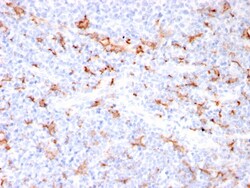
Biotium S100A9 + Calprotectin (S100A8/A9 Complex)(MAC3157R), CF568 conjugate, 0.1mg/mL
Recognizes the L1 or Calprotectin molecule, an intra-cytoplasmic antigen comprising of a 12 kDa alpha chain and a 14 kDa beta chain expressed by granulocytes, monocytes and by tissue macrophages. Macrophages usually arise from hematopoietic stem cells in the bone marrow. Under migration into tissues, the monocytes undergo further differentiation to become multifunctional tissue macrophages. They are classified into normal and inflammatory macrophages. Normal macrophages include macrophages in connective tissue (histiocytes), liver (Kupffer's cells), lung (alveolar macrophages), lymph nodes (free and fixed macrophages), spleen (free and fixed macrophages), bone marrow (fixed macrophages), serous fluids (pleural and peritoneal macrophages), skin (histiocytes, Langerhans's cell) and in other tissues. Inflammatory macrophages are present in various exudates. Macrophages are part of the innate immune system, recognizing, engulfing and destroying many potential pathogens including
Sino Biological Anti-NCAM-1/CD56 Antibody, Rabbit Polyclonal 100 µL
Produced in rabbits immunized with purified, recombinant Human NCAM-1/CD56 (rh NCAM-1/CD56; Catalog#10673-H08H; NP_001070150.1; Met1-Pro603). NCAM-1/CD56 specific IgG was purified by Human NCAM-1/CD56 affinity chromatography.
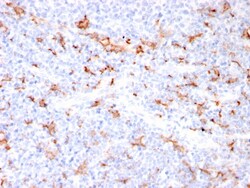
Biotium S100A9 + Calprotectin (S100A8/A9 Complex)(MAC3157R), CF647 conjugate, 0.1mg/mL
Recognizes the L1 or Calprotectin molecule, an intra-cytoplasmic antigen comprising of a 12 kDa alpha chain and a 14 kDa beta chain expressed by granulocytes, monocytes and by tissue macrophages. Macrophages usually arise from hematopoietic stem cells in the bone marrow. Under migration into tissues, the monocytes undergo further differentiation to become multifunctional tissue macrophages. They are classified into normal and inflammatory macrophages. Normal macrophages include macrophages in connective tissue (histiocytes), liver (Kupffer's cells), lung (alveolar macrophages), lymph nodes (free and fixed macrophages), spleen (free and fixed macrophages), bone marrow (fixed macrophages), serous fluids (pleural and peritoneal macrophages), skin (histiocytes, Langerhans's cell) and in other tissues. Inflammatory macrophages are present in various exudates. Macrophages are part of the innate immune system, recognizing, engulfing and destroying many potential pathogens including